
“Welding technology is one of the most important steps in lithium battery assembly, as the quality of the weld directly affects the performance and lifespan of the battery pack. Lithium battery welding mainly includes the connection of leads/wires and the connection of nickel strips.
Among these, resistance spot welding is the most commonly used method for nickel strip welding. Below, we will introduce the process of nickel strip welding for lithium batteries.”
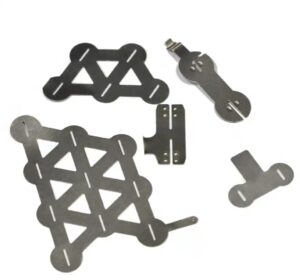
Common Welding Methods for Lithium Batteries
Spot Welding: This is a traditional welding method and currently the most widely used, also known as resistance welding. It works on the principle of resistance heating: the interaction between electric current and resistance causes the welding material to heat up and melt, forming a strong connection. Spot welding is mainly suitable for welding steel-cased cylindrical battery cells, such as those used in small electric vehicle battery packs, energy storage batteries, and household appliances.
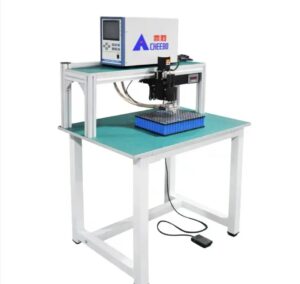
Laser Welding: This method utilizes the excellent directionality and high power density of a laser beam. Through an optical system, the laser is focused onto a very small area, creating a highly concentrated thermal zone in an extremely short time. This causes the material at the welding spot to melt and form a strong weld point and seam. Laser welding is generally suitable for welding large prismatic aluminum cells or assembling pouch batteries, such as battery packs for large electric vehicles, electric cars, and large energy storage systems.
The above two welding methods are the most commonly used in lithium battery assembly, and the choice depends on specific requirements. The main distinction lies in the battery type: cylindrical cells are typically assembled using spot welding, while prismatic aluminum and pouch cells are generally welded using laser technology.

Overall, Chibao Technology’s lithium battery spot welding machines offer many advantages in battery assembly, including high precision, high quality, high welding efficiency, and excellent cost performance. However, in actual use, it is important to select the welding method that best suits specific requirements.
